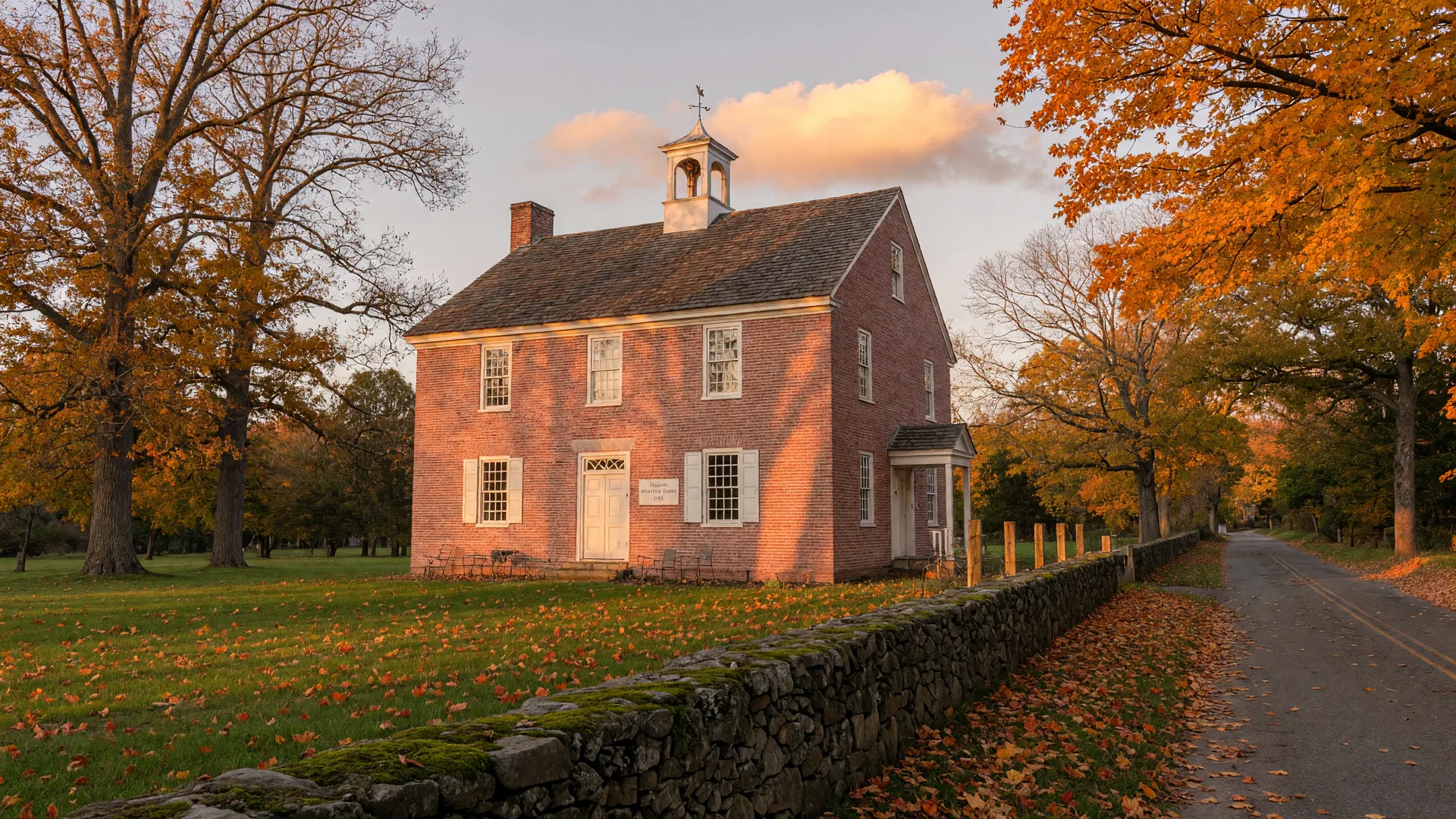
Cinnaminson's history reaches back long before the township had a name on a map. Lenni-Lenape people who hunted and fished along the Delaware River knew this ground as Senamensing, a word that means "sweetwater," and the township's official history says they gave that name to their hunting grounds here. The story that followed is a familiar South Jersey arc: Quaker settlers arriving in the late 1600s, a colonial crossroads growing into a farm town, and finally the suburban community of today, where much of that past is still visible.
If you are researching a move to Cinnaminson, or just curious about the town you already call home, this guide tells the story in order, from the Lenape name to the Route 130 corridor, and points you to the landmarks you can visit for yourself. I have spent years helping families buy and sell homes throughout Burlington County, and the history is a big part of why this town feels the way it does: rooted, neighborly, and quietly proud of where it came from.
What Does the Name Cinnaminson Mean?
The short answer is that Cinnaminson comes from the Lenni-Lenape, the Indigenous people who lived along the Delaware River long before European settlement. The township's official history explains that the Lenape called their hunting grounds here Cinnaminson, also spelled Senamensing, a name that means "sweetwater." It is a reference to the springs and streams that fed the area, and to the river that still shapes the town's eastern edge.
That river location is the thread that runs through the whole story. The Lenape used the Delaware as a highway and a food source. Quaker settlers arriving with the West Jersey colony wanted riverfront land for the same reasons: water, farmland, and access to Philadelphia. Cinnaminson's position roughly 11 miles east of Philadelphia, along the Delaware, made it desirable from the very start, and the meaning of the name is still a favorite conversation starter at township events today.
When Was Cinnaminson Founded?
Cinnaminson Township was incorporated on March 15, 1860, by an act of the New Jersey Legislature, carved out of the western portion of Chester Township, which is now Maple Shade Township. Before that date the area sat inside the larger colonial-era townships that organized South Jersey's farms and riverfront, and its boundaries were drawn and redrawn as the region grew.
Those boundary changes tell a story of their own. In 1880 the eastern portion split off to form what is now Delran Township. Riverton incorporated as a borough in 1893, and Palmyra followed in 1894, each taking parts of the township's riverfront with them. Modern Cinnaminson, shaped by those 19th-century decisions, has Riverton and Delran as neighbors along the Delaware, and the three towns share a history that still shows in their streets and landmarks. The Cinnaminson neighborhood guide has more on how those boundaries play out on the ground today.
What Is the Quaker History of Cinnaminson?
The deepest roots of the community are Quaker. In the late 1600s and through the 1700s, the West Jersey colony drew English Quakers to the Delaware Valley with promises of religious freedom and rich farmland, and Cinnaminson became part of that settlement. One of the most important results is the Westfield Friends Meeting, a Quaker congregation whose name comes from the "west field" of Thomas Lippincott, the farm where the meeting first gathered.
The meeting's buildings show how the congregation endured. A first meeting house went up on Riverton Road around 1800 or 1801. It burned in 1859, and the congregation rebuilt it the same year, finishing the structure in 1860. That 1859 brick building still stands at 2201 Riverton Road, now used as an annex and preschool for the school next door, while the meeting house used for worship today was built in 1963. It is a quiet, unassuming stretch of road, and one of the most historically meaningful addresses in the township.
Next door, Westfield Friends School was founded in 1788 and is recognized as the oldest Friends school in the United States. It has operated continuously as a Quaker day school, and today it serves students from preschool through eighth grade, still under the care of the meeting that started it. For families weighing private education, it is a living piece of town history as well, and it is covered in more detail in the Cinnaminson schools guide.
What Historic Landmarks Can You Visit in Cinnaminson Today?
The best part of Cinnaminson's history is that so much of it is still there to see. Start with Westfield Friends Meeting and School at 2201 Riverton Road, where the 1859 brick building and the working school carry three centuries of Quaker tradition. From there, Hunter's Farm Market at 1101 Union Landing Road has been farmed by the Hunter family since 1760, a National Bicentennial Farm and one of the oldest continuously worked farms in the region. The market marked its 32nd season in 2024, and it gets its full due in the hidden gems in Cinnaminson post.
Not far away, at 808 Pomona Road, the Phillips School tells a more sobering and more recent chapter. Built in the 1890s as a one-room school for African American students, it served that role during segregation and later housed special-needs classes, an alternative high school, and offices of the Cinnaminson Board of Education. Since the early 1980s, the building has been home to the Burlington County Footlighters, a community theater company. On show nights, the schoolhouse that once taught local children now fills with neighbors applauding local performers, which is about as Cinnaminson a sentence as you can write.
Two more landmarks round out the list. The Samuel Allen House, known as Ivystone and built in 1762, still stands near Five Points as one of the township's oldest surviving buildings. And Taylor Wildlife Preserve on Taylors Lane protects the last working farm on the Delaware River between Camden and Trenton, deeded to the New Jersey Natural Lands Trust by a local family. The parks and outdoor spaces post covers the preserve's trails in detail, a reminder that the town's past and its favorite outdoor spots are often the same place.
How Did Route 130 Shape Cinnaminson?
The highway that defines modern Cinnaminson has colonial bones. Route 130 follows the old Burlington Pike, a road built in the 1740s to connect the colonial capital at Burlington with Cooper's Ferry, the crossing that became Camden. In its early days it was a sand-and-gravel road known plainly as the Road to Cooper's Ferry, and it carried travelers, goods, and mail along the Delaware. The route was chartered as the Burlington Turnpike in 1808, and when the federal highway system arrived, the segment through Burlington County was designated as part of US 130 in 1926.
The corridor changed character in the decades after World War II as auto traffic grew. Shopping centers, diners, and dealerships lined the highway, and Cinnaminson earned a reputation as the gateway to Burlington County on Route 130. The Cinnaminson Diner at 1202 Route 130 N is a survivor of that era, the classic American diner that the corridor made famous, and it is one of the stops featured in the Cinnaminson restaurants guide.
The Route 130 story matters for homebuyers today, too. The corridor is the town's commercial spine, and the township has worked on redeveloping stretches of it for years, which has helped newer retail and residential projects take shape along the oldest road in the area. It is a rare mix: a road with a 1740s pedigree that is still the center of daily life in 2026.
What Does Cinnaminson Look Like Today?
Today Cinnaminson is a suburb of more than 17,000 residents, roughly 11 miles east of Philadelphia, with the Delaware River on its eastern edge and one of the highest rated public school districts in Burlington County. The township keeps the pace of community life up through events like Community Day, the summer concert series, and the Fall Festival at Wood Park, all tracked on the community events calendar. Commuters get the River LINE light rail at Cinnaminson Station and NJ Transit bus service along Route 130, which keeps the old road's job of moving people and goods between the river towns and Philadelphia alive in a new form. The Cinnaminson commute guide covers those options in detail.
What the history adds is texture. When you drive past the 1859 meeting house, pick up produce at a farm stand that has been in one family for generations, or catch a play in a 130-year-old schoolhouse, you are living in the town the Lenape named for sweet water. For families deciding whether Cinnaminson is the right place to put down roots, that depth of story is a quiet but real part of the appeal, and the about Cinnaminson page connects it to the bigger picture of schools, neighborhoods, and daily life.
Rooted in History, Ready for Your Next Chapter
Whether you are buying your first home in Cinnaminson or selling one you have loved for years, the town's history is part of the value. I have helped families buy and sell throughout Burlington County, and I would love to help you find your place in the story. Have questions about Cinnaminson? Contact Bob Millaway at 856.426.1522, or book a time to talk through your goals.
Book a Call with BobFrequently Asked Questions About Cinnaminson's History
What does the name Cinnaminson mean?
Cinnaminson comes from the Lenni-Lenape people, who called their hunting grounds here Senamensing, or Cinnaminson, a name that means sweetwater, according to the township's official history. It refers to the springs and streams that fed the area near the Delaware River.
When was Cinnaminson Township founded?
Cinnaminson Township was incorporated on March 15, 1860, carved from the western portion of Chester Township, now Maple Shade Township. Parts of the township later split off to form Delran in 1880, Riverton in 1893, and Palmyra in 1894.
What is the Quaker history of Cinnaminson?
Cinnaminson was settled under Quaker influence as part of the West Jersey colony in the late 1600s and through the 1700s. The Westfield Friends Meeting gathered on Thomas Lippincott's "west field," and Westfield Friends School, founded in 1788, is recognized as the oldest Friends school in the United States.
Where is the Westfield Friends Meeting House and how old is it?
The Westfield Friends campus is at 2201 Riverton Road in Cinnaminson. A first meeting house built around 1800 or 1801 burned in 1859; the brick replacement finished in 1860 still stands as a school annex, while the meeting house used for worship today dates to 1963.
What are the oldest landmarks in Cinnaminson?
The short list starts with Hunter's Farm at 1101 Union Landing Road, farmed by the Hunter family since 1760, and the Samuel Allen House near Five Points, built in 1762. The 1859 Westfield Friends building, the 1890s Phillips School at 808 Pomona Road, and Taylor Wildlife Preserve's riverfront farmland round out the major surviving landmarks.
What is the Phillips School in Cinnaminson?
The Phillips School at 808 Pomona Road was built in the 1890s as a one-room school for African American students. It later served as a special-needs school, an alternative high school, and Board of Education offices, and since the early 1980s it has been home to the Burlington County Footlighters community theater.
What was Route 130 before it was a highway?
Route 130 follows the old Burlington Pike, a road built in the 1740s to connect colonial Burlington with Cooper's Ferry, later Camden. Known at first simply as the Road to Cooper's Ferry, it was chartered as the Burlington Turnpike in 1808 and became part of the US 130 highway system in 1926.
Is there a historic farm in Cinnaminson?
Yes. Hunter's Farm Market at 1101 Union Landing Road has been farmed by the Hunter family since 1760 and is recognized as a National Bicentennial Farm. The market marked its 32nd season in 2024 and operates seasonally on the Jersey Fresh farm circuit.
Thinking About Moving to Cinnaminson?
The history in this post is the everyday texture that makes Cinnaminson feel like a community, and I would love to show you around in person. Whether you are buying, selling, or just starting to research the area, I can help you understand what life here really looks like. I am an AI Certified Agent with Epique Realty and have spent years helping families buy and sell throughout Burlington County.