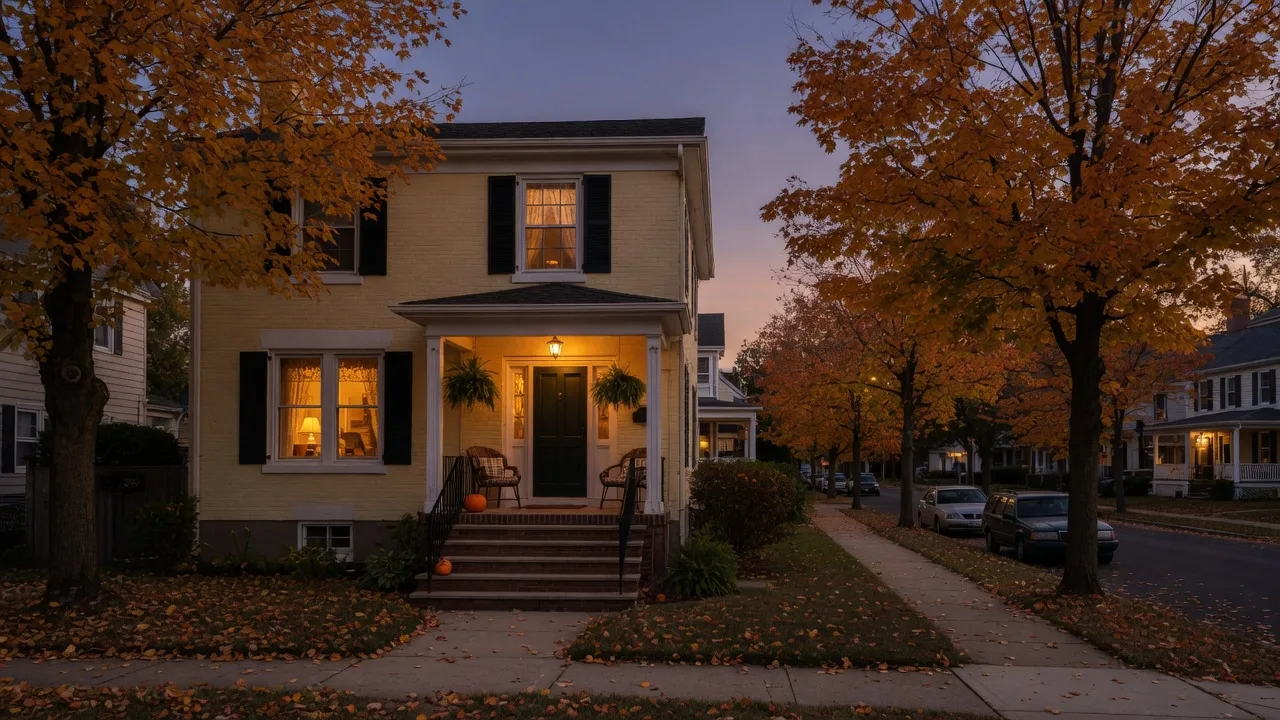
Home safety in Cinnaminson comes down to a handful of checks that New Jersey law, the local landscape, and common sense all point to: working smoke detectors and carbon monoxide alarms, a fresh radon test, and a clear picture of your flood risk along the Delaware River. Most of these checks cost little and take part of an afternoon, yet they are the difference between a small repair and a serious emergency. This guide walks through what the law actually requires, what protects your family, and where you can get it done locally, whether you live in a post-war ranch in Rolling Green or a newer home near Cinnaminson Harbor.
Why does home safety matter for Cinnaminson homes?
Cinnaminson's housing stock is largely post-war: split-levels, colonials, ranches, and Cape Cods with a median construction year around 1966, and roughly 17 percent of homes built before 1950. Older homes mean heating systems, windows, and attics that have seen decades of freeze-thaw cycles, and every season tests them a little harder. Winter is when the classic risks cluster: windows sealed shut, furnaces and fireplaces running for months, and cars warming up in attached garages. That combination is precisely why New Jersey law is so specific about where detectors go and what condition they must be in.
The township's position along the Delaware adds one more layer. In neighborhoods like Cinnaminson Harbor and the streets that run down toward the river, flood exposure is a real, address-by-address question, not a generic talking point. The good news is that safety here is a short list of concrete tasks, most of them cheap enough to do this weekend. That is the whole point of this checklist: no scare tactics, just the things that actually go wrong and the rules that already govern them.
Are smoke detectors required in every Cinnaminson home?
Yes, and the rules are more specific than most people realize. New Jersey's Uniform Fire Code (N.J.A.C. 5:70-4.19) requires working smoke alarms in every one- and two-family dwelling, installed on every level of the home including basements and finished attics, and outside each separate sleeping area in the immediate vicinity of the bedrooms, typically within about 10 feet of bedroom doors. Crawl spaces and unfinished attics are exempt, but practically every living level is not.
The age rule trips up the most people: alarms must be less than 10 years old and in working condition, and the manufacture date is printed right on the unit. Hardwired alarms may not be converted to battery-only operation, so if your system was hardwired when built, keep it hardwired. Homes built before January 1977 must have battery-operated alarms on each level and outside sleeping areas. Testing is the easy part of the routine: press the test button monthly, replace batteries when clocks change, and replace entire units at the 10-year mark.
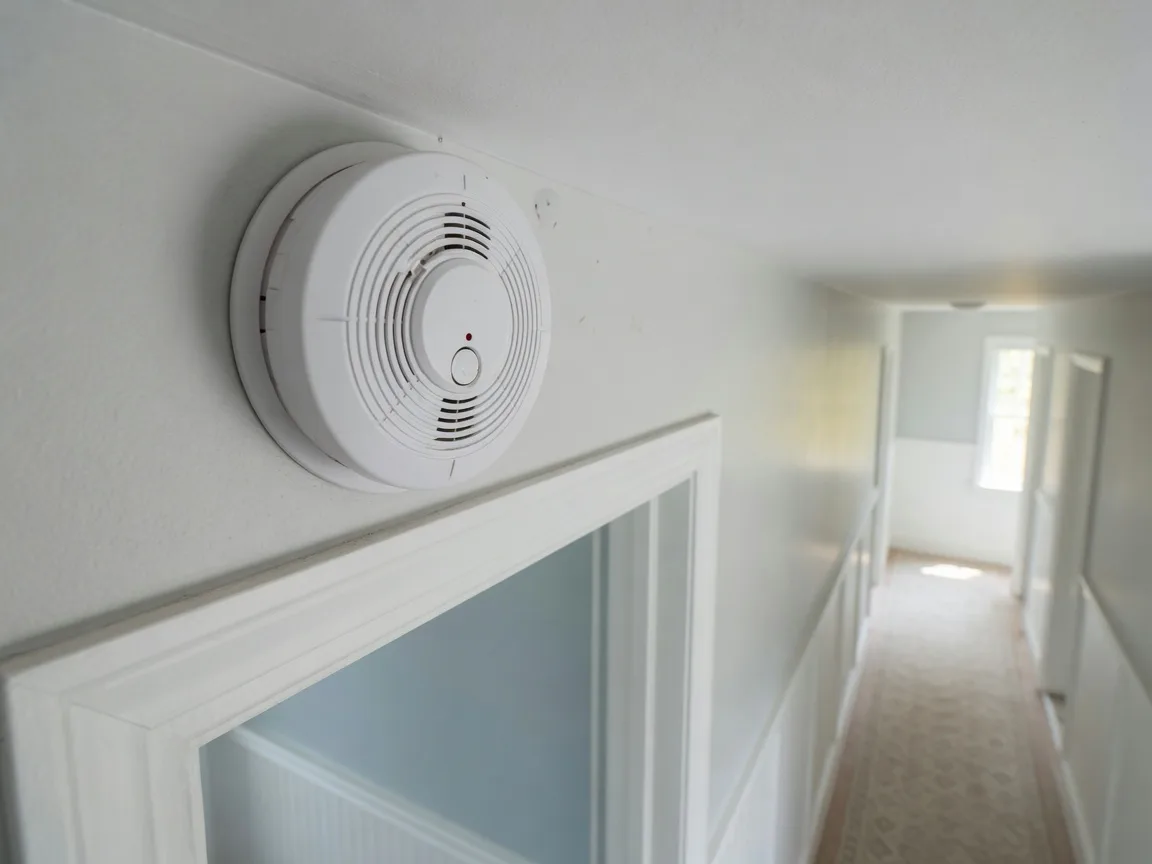
A detector on the ceiling near the bedrooms checks two boxes at once when it is a combination smoke and carbon monoxide unit.
Do you need a carbon monoxide detector in New Jersey?
In almost every Cinnaminson home, yes. New Jersey requires carbon monoxide alarms in one- and two-family dwellings unless the home has no fuel-burning appliance and no attached garage. That exemption covers very few houses here: a gas furnace, a gas water heater, a fireplace, a wood stove, or an attached garage each on their own trigger the requirement, and most Cinnaminson homes have two or three of those.
Placement matters. CO alarms go in the immediate vicinity of sleeping areas, within about 10 feet of bedroom doors so they are audible in every bedroom, and a larger or split-level home may need more than one. Combination smoke and carbon monoxide units are allowed, which simplifies the ceiling real estate. Heating season is when CO risk peaks: closed windows, a furnace doing heavy work, and cars idling in attached garages. If you cannot remember the last time you tested the unit, today is a good day.
What is the NJ certificate of compliance when you sell?
Selling, or leasing, triggers its own safety requirement. Since January 1, 2019, New Jersey has required a Certificate of Smoke Detector, Carbon Monoxide Alarm and Fire Extinguisher Compliance (Form DFS-2) before a one- or two-family dwelling is sold, leased, or changes occupancy. The owner obtains it from the local enforcing agency, which in Cinnaminson means the township fire official, and it essentially confirms that alarms and extinguishers are present, in the right places, and working.
Practically, that means detector placement and age are part of the closing process, not an afterthought. Sellers who test, date-check, and replace ahead of time avoid the last-minute scramble and the surprise fix-it list at the inspection table. If you are prepping a home for sale, our complete Cinnaminson home selling guide covers the inspection and disclosure side of the process, and the real estate market page shows what condition and preparation are worth in the current market.
Should you test your Cinnaminson home for radon?
Yes, and the short version is that Burlington County is not a no-radon county. On the EPA Map of Radon Zones, Burlington County sits in Zone 2, moderate potential, with predicted average indoor screening levels of 2 to 4 pCi/L. The zone map is only a screening tool: the EPA and the U.S. Surgeon General recommend testing every home regardless of zone, and roughly 10 percent of radon tests in New Jersey come back at or above the action level.
Testing is easy. A short-term test kit sits in the lowest lived-in level for a few days with windows closed, then goes to a lab. If the result is 4 pCi/L or higher, fix the home with a professionally installed mitigation system; between 2 and 4 pCi/L, the risk is real enough that mitigation is worth considering. The Burlington County Health Department distributes free test kits, typically around National Radon Action Month in January, so it costs nothing to find out where your home stands.
Is your Cinnaminson home in a flood zone?
Cinnaminson's riverside location makes this a genuine address-by-address question. The Delaware River Basin Commission notes that at moderate to major flood stages, roadways near the river and its tidal tributaries begin to flood, and the township's river-adjacent streets sit in that exposure zone. Cinnaminson has taken part in the National Flood Insurance Program since 1978 and enforces its own Flood Damage Prevention ordinance to regulate building in mapped hazard areas.
On FEMA's Flood Insurance Rate Maps, homes inside Special Flood Hazard Areas, the 100-year floodplain mapped as A or AE zones, must carry flood insurance when there is a federally backed mortgage. Homes in Zone X, moderate-to-low risk, are not required to carry it, but flood insurance is still available and worth a conversation for river-adjacent properties. The only way to know your real status is to look up your address on the FEMA Flood Map Service Center at msc.fema.gov, not to rely on a memory of what the map said years ago. If you are in the market, this is one of the questions I always ask about a house before we look at it, and it is a big part of why our neighborhood guide is organized the way it is.
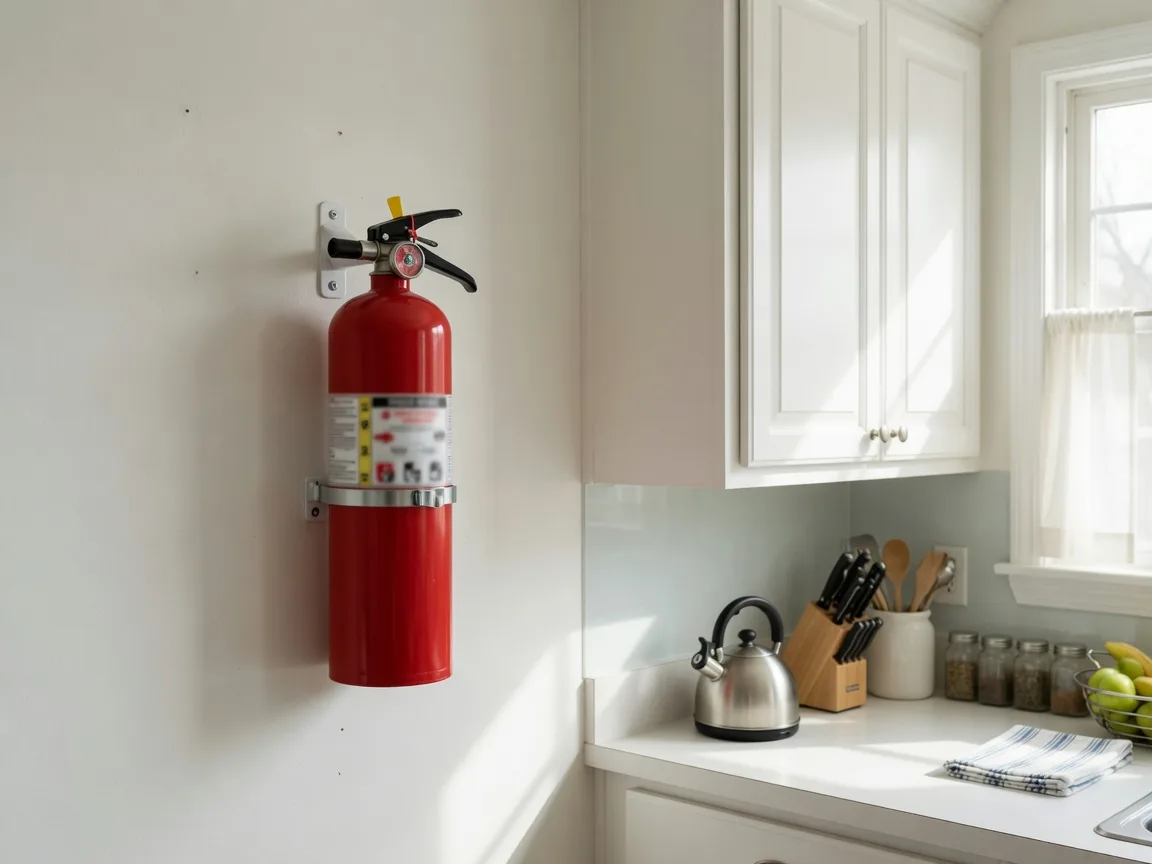
A kitchen extinguisher within reach is the one everyone hopes they never need and no one regrets owning.
What else belongs on a home safety checklist?
Detectors and zone maps handle the big-ticket risks, but the monthly routine lives in the small stuff. Run through this list once, then again each fall:
Practice a fire escape plan. Every bedroom needs two ways out, the family needs one meeting spot outside, and the plan is only real if you practice it twice a year, especially with kids.
Keep fire extinguishers where fires start. The National Fire Protection Association recommends one on every level, with the kitchen, garage, and basement as the priority spots. Check the pressure gauge monthly, and learn the PASS routine (pull, aim, squeeze, sweep) before you need it.
Set the water heater to about 120 degrees. That temperature prevents scalds, especially with young kids, and trims the energy bill at the same time.
Test the sump pump before heavy rain. Pour a bucket of water into the pit and watch it cycle. A pump that fails during a nor'easter is how finished basements become spring projects.
Clean the dryer vent. Lint buildup in the vent line is one of the leading causes of home fires, and the fix is a vacuum and a brush once a year.
Check the garage door auto-reverse. Place a small object in the door's path; it should stop and reverse on contact. This one keeps pets and kids safe and takes ten seconds.
Keep emergency numbers on the fridge. Beyond 911, that is the police non-emergency line at (856) 829-6666 and the fire district at (856) 829-5220, plus your regular family contacts. When stress is high, nobody should be hunting for a number.
If you bought recently or are planning to buy, the seller should hand over documentation on the roof, heating system, and any water intrusion history. That paper trail is part of what the fall maintenance checklist and the energy saving guide are really about: knowing your home's systems before they fail, not after.
Where can Cinnaminson homeowners buy safety supplies?
You do not have to travel far. Harbor Freight at 2501 US-130 sits right in Cinnaminson and stocks smoke detectors, combination alarms, fire extinguishers, and the basics. Lowe's at 1331 Fairview Blvd in Delran covers the bigger project runs, and if you like personal service, Schwering's Hardware at 309 E Broad St in Palmyra and Moorestown True Value Hardware at 300 Mill St in Moorestown both carry the essentials and can talk you through placement. For radon, skip the store entirely and ask the Burlington County Health Department about free test kits.
Whatever you buy, write the date on the unit in permanent marker when you install it. Ten years from now, that date tells you whether it is time to replace, and it makes the pre-sale certificate of compliance a five-minute job instead of a weekend.
How does home safety protect your home value?
Safety reads as maintenance, and maintenance reads as value. Buyers and their inspectors notice dated detectors, sagging sump pump cords, and missing extinguishers, and the certificate of compliance means none of it can be skipped at closing anyway. A home that tests clean and documents its upkeep tends to inspect faster and negotiate from a stronger place, which is exactly the kind of quiet advantage that shows up in the final number.
If you are weighing all of this against the cost of ownership, the cost of living breakdown puts insurance, utilities, and maintenance in context with the real monthly picture, and the market page tracks what Cinnaminson homes are actually selling for. Safety, like everything else in a home, is an investment that pays twice: once in protection, and once at the closing table.
Home safety in Cinnaminson: Your questions, answered
Are smoke detectors required in every Cinnaminson home?
Yes. New Jersey Uniform Fire Code (N.J.A.C. 5:70-4.19) requires working smoke alarms on every level of a one- and two-family dwelling, including basements and finished attics, plus alarms outside each separate sleeping area within about 10 feet of bedroom doors. Alarms must be less than 10 years old, and hardwired alarms may not be converted to battery-only operation.
Do I need a carbon monoxide detector in New Jersey?
In most Cinnaminson homes, yes. New Jersey requires CO alarms in one- and two-family dwellings unless the home has no fuel-burning appliance and no attached garage. Homes with a gas furnace, gas water heater, fireplace, wood stove, or attached garage all need CO alarms within about 10 feet of bedroom doors.
What is the certificate of compliance when selling a home in NJ?
Since January 1, 2019, New Jersey requires a Certificate of Smoke Detector, Carbon Monoxide Alarm and Fire Extinguisher Compliance (Form DFS-2) before a one- or two-family home is sold, leased, or changes occupancy. The owner obtains it from the local enforcing agency, in Cinnaminson that means the township fire official.
Should Cinnaminson homeowners test for radon?
Yes. Burlington County is in EPA Radon Zone 2, moderate potential, with predicted average indoor levels of 2 to 4 pCi/L, and the EPA and U.S. Surgeon General recommend testing every home regardless of zone. Test with a short-term kit; if the result is 4 pCi/L or higher, install a mitigation system, and consider one for 2 to 4 pCi/L.
Is my Cinnaminson home in a flood zone?
It depends on the address. Cinnaminson participates in the National Flood Insurance Program and riverside streets have real Delaware River flood exposure. Homes in FEMA Special Flood Hazard Areas need flood insurance with a federally backed mortgage; homes in Zone X do not. Check the FEMA Flood Map Service Center at msc.fema.gov by address to confirm.
Where can I buy smoke detectors and fire extinguishers near Cinnaminson?
Harbor Freight at 2501 US-130 is right in Cinnaminson and stocks detectors, extinguishers, and safety gear. Lowe's at 1331 Fairview Blvd in Delran covers bigger runs, and Moorestown True Value Hardware at 300 Mill St in Moorestown and Schwering's Hardware at 309 E Broad St in Palmyra offer personal service for the basics.
How often should I test and replace smoke detector batteries?
Test every smoke and carbon monoxide alarm monthly, replace batteries at least once a year or whenever a unit chirps, and replace whole units when they reach 10 years old, the date is printed on the alarm. Combination smoke/CO units simplify the routine, but the 10-year replacement rule applies to them as well.
What is the fire extinguisher requirement in New Jersey homes?
The NJ certificate of compliance for selling or leasing a one- and two-family home includes a working fire extinguisher, and the National Fire Protection Association recommends keeping one on every level, with the kitchen, garage, and basement the highest-priority spots. Check the pressure gauge monthly.
A neighborly reminder
I have walked through basements and attics across this township for years, from post-war ranches in Rolling Green to newer construction near Cinnaminson Harbor, and the safest homes are never the most expensive ones. They are the ones where somebody tested the detectors, dated the extinguisher, and looked up the flood map before the storm, not after. If you would like a second set of eyes on what your home needs, or you are buying and want to know which questions to ask about a house, I am glad to help.
Have questions about Cinnaminson? Contact Bob Millaway at 856.426.1522
Contact Bob